Fall Prevention Guide
Fall Prevention, One of the Most Common Risks for Elderly Loved Ones
A complete family guide to understanding, reducing, and responding to falls, and how compassionate home care helps keep an older loved one safe at home Of all the worries that families carry about an aging parent or spouse, few are as constant, or as justified, as the fear of a fall. A single fall can change everything in an instant. What was an independent, active life can become, in the space of one afternoon, a story of hospital stays, surgeries, lost confidence, and a long road back that some older adults never fully complete. Falls are quiet in the way they arrive and loud in the way...
A complete family guide to understanding, reducing, and responding to falls, and how compassionate home care helps keep an older loved one safe at home Of all the worries that families carry about an aging parent or spouse, few are as constant, or as justified, as the fear of a fall. A single fall can change everything in an instant. What was an independent, active life can become, in the space of one afternoon, a story of hospital stays, surgeries, lost confidence, and a long road back that some older adults never fully complete. Falls are quiet in the way they arrive and loud in the way they echo through a family, and they are one of the most common and serious risks our elderly loved ones face.
The hopeful truth, and the reason this guide exists, is that falls are not an inevitable part of growing older. They are not simple bad luck. The great majority of falls have identifiable causes, and those causes can be understood, reduced, and in many cases removed altogether. With the right knowledge, the right changes at home, and the right support, families can dramatically lower the odds that a loved one falls, and soften the consequences if one ever does. This guide will walk you through all of it, from why falls happen to how to prevent them, and it will show you throughout how professional, compassionate home care fits into that picture, because in our experience at Premier In-home Care, a familiar caregiver in the home is one of the single most effective safeguards against falls that a family can put in place.
Why are falls such a serious risk for older adults?
Falls are a serious risk for older adults because they are both extremely common and unusually likely to cause lasting harm, and because a first fall so often leads to more. Roughly one in four adults over the age of sixty five falls each year, which makes falling the most common cause of injury in later life, and once a person has fallen a single time, their chance of falling again roughly doubles. That pattern, one fall making the next more likely, is part of what makes this risk so important to take seriously and to get ahead of.
The reason falls carry such weight is that an older body is less able to absorb them. Bones that have thinned with age fracture more easily, and a fall that a younger person would shrug off can leave an older adult with a broken hip, wrist, or shoulder, or with a head injury that is not always obvious right away. Recovery is slower, and it is not only the injury itself that harms. A hospital stay for a frail older adult can bring on a cascade of setbacks, muscle loss from days in bed, confusion, infections, and a decline in strength that makes the next fall more likely still. For too many families, a fall is the event that ends independence, forcing a move away from a beloved home and into a facility that no one wanted.
There is an emotional dimension too, one that families often underestimate. After a fall, many older adults develop a deep fear of falling again, and that fear, though completely understandable, can be harmful in its own right. It leads people to move less, to avoid activity, and to withdraw from the very things that keep them strong and connected. That withdrawal weakens the muscles and worsens the balance, which raises the fall risk, which deepens the fear. It is a cycle, and breaking it is one of the quiet, important things that thoughtful daily support can do. A caregiver who offers a steady arm and gentle encouragement helps a fearful loved one stay active safely, which is often exactly what is needed to reverse that downward spiral.
What causes falls in the elderly?
Falls in the elderly are almost always caused by a combination of factors rather than a single one, usually a mix of changes within the body and hazards in the environment that line up at the wrong moment. Understanding these causes is the foundation of prevention, because nearly every one of them can be addressed. Care professionals generally group the causes into two families, the internal factors that have to do with a person’s own health and body, and the external factors that have to do with their surroundings, their footwear, and their daily habits.

Internal factors that raise the risk of falling
The internal causes are the changes that aging, illness, and medications bring to the body. Muscle weakness, particularly in the legs and core, is one of the most significant, since strong muscles are what allow a person to catch themselves when they stumble. Balance and gait naturally change with age, and conditions such as arthritis, Parkinson’s, the aftermath of a stroke, or neuropathy can affect how steadily a person walks and how well they sense the position of their own feet. Vision decline plays a large role, since aging eyes take in less light, adjust more slowly between...
The internal causes are the changes that aging, illness, and medications bring to the body. Muscle weakness, particularly in the legs and core, is one of the most significant, since strong muscles are what allow a person to catch themselves when they stumble. Balance and gait naturally change with age, and conditions such as arthritis, Parkinson’s, the aftermath of a stroke, or neuropathy can affect how steadily a person walks and how well they sense the position of their own feet. Vision decline plays a large role, since aging eyes take in less light, adjust more slowly between bright and dark spaces, and lose some of the depth perception that judges a step or a curb.
Medications are a major and often overlooked contributor. Many common prescriptions, including those for blood pressure, sleep, anxiety, and pain, can cause dizziness, drowsiness, or a drop in blood pressure when standing, and the risk grows when a person takes several medications that interact. Chronic conditions add their own dangers. Diabetes can affect sensation in the feet and cause blood sugar swings that bring on weakness or lightheadedness, heart conditions can cause dizziness, and any illness that brings fatigue or confusion raises the odds of a fall. Dehydration, which is a genuine and constant concern in the Tucson climate, can cause dizziness and fainting, especially in older adults whose sense of thirst has faded. Even a simple urinary tract infection, which in seniors often shows up as sudden confusion rather than obvious discomfort, can trigger a fall.
External factors and household hazards
The external causes are the ones in a person’s surroundings and daily routine, and they are frequently the easiest to fix. The home itself is often full of hazards that no one notices until a fall reveals them. Loose rugs, electrical cords, clutter on the floor, poor lighting, slippery bathroom surfaces, a lack of grab bars, and stairs without sturdy railings are among the most common. Footwear matters more than most families realize, since loose slippers, socks on smooth floors, and worn or backless shoes all invite a slip. Reaching for something on a high shelf, rushing to answer a phone or a door, getting up too quickly in the night, and carrying items that block the view of the floor are all everyday behaviors that lead to falls.
What makes falls so preventable is that these internal and external factors interact, and interrupting even one link in the chain can be enough. A person with slightly weak legs and mildly poor vision may do fine until a loose rug and a dim hallway are added at the wrong moment. Remove the rug, brighten the hallway, and provide a steadying presence, and the fall that might have happened simply does not. This is the heart of fall prevention, and it is work that a knowledgeable caregiver does naturally, spotting the hazards a family has stopped seeing and supporting the physical needs that make a stumble more likely.
How can you make a home safer to prevent falls?
You can make a home safer by systematically removing hazards, improving lighting, adding support where it is needed, and arranging daily life so that safety is built into the routine. The home is where most falls happen, which means it is also where the most effective and affordable prevention lives. A careful home safety review, done room by room, is one of the highest value steps any family can take, and it is something our caregivers and care managers help families with as a natural part of setting up care.

Making the whole home safer
Some improvements apply throughout the house. Good lighting is essential, so every hallway, stairway, and room should be brightly and evenly lit, with light switches easy to reach at both ends of a hallway or stairway and nightlights placed along the path from the bedroom to the bathroom. Floors should be kept clear of clutter, cords, and anything that could be tripped over, and loose rugs should be removed or secured firmly to the floor, since a scatter rug is one of the most common causes of falls in the home. Frequently used items should be stored within easy reach, between waist and...
Some improvements apply throughout the house. Good lighting is essential, so every hallway, stairway, and room should be brightly and evenly lit, with light switches easy to reach at both ends of a hallway or stairway and nightlights placed along the path from the bedroom to the bathroom. Floors should be kept clear of clutter, cords, and anything that could be tripped over, and loose rugs should be removed or secured firmly to the floor, since a scatter rug is one of the most common causes of falls in the home. Frequently used items should be stored within easy reach, between waist and shoulder height, so no one has to climb or bend to reach them. Where a home has stairs, they should have sturdy handrails on both sides, good lighting, and clearly visible edges.
Making the bathroom safer
The bathroom deserves special attention, because it is one of the most dangerous rooms in the house. Wet, hard, slick surfaces combine with the need to lower and raise oneself, which is exactly the movement that challenges aging strength and balance. Grab bars installed by the toilet and inside the shower or tub give a person something solid to hold, and they must be properly mounted into the wall structure rather than relying on a towel bar, which will not hold a person’s weight. A shower chair or bench allows bathing to be done sitting down, a nonslip mat reduces the risk of a slip, and a raised toilet seat makes sitting and standing easier and safer. These modest changes prevent a great many serious falls.
Making the bedroom and living areas safer
In the bedroom, the bed should be at a height that lets a person sit with both feet flat on the floor, a lamp or light switch should be within reach without getting up, and the path to the bathroom should be clear and lit. Many falls happen at night, when a person rises half asleep to use the bathroom, so this nighttime path deserves particular care. In living areas, furniture should be arranged to leave wide, clear walkways, chairs should be stable and firm with armrests to push up from, and the temptation to route cords across walking paths should be avoided entirely.
Even the best home modifications, though, address only the external half of the problem. A grab bar cannot notice that a loved one seems dizzy this morning, and a nightlight cannot offer a steadying arm on the way to the bathroom. This is where the human element becomes essential, and where professional caregivers add a dimension that no home modification can match.

How do professional caregivers help prevent falls?
Professional caregivers help prevent falls by combining hands on physical support, constant attention to changing risks, and steady encouragement of the habits that keep a person strong, all delivered by someone who knows the individual well. Home safety equipment is passive, waiting in place to help if used correctly. A caregiver is active, present, and adaptive, and that human presence is one of the most powerful fall prevention tools a family can put in place. At Premier In-home Care, reducing fall risk is woven into everything our caregivers do, and it is worth looking closely at how...
Professional caregivers help prevent falls by combining hands on physical support, constant attention to changing risks, and steady encouragement of the habits that keep a person strong, all delivered by someone who knows the individual well. Home safety equipment is passive, waiting in place to help if used correctly. A caregiver is active, present, and adaptive, and that human presence is one of the most powerful fall prevention tools a family can put in place. At Premier In-home Care, reducing fall risk is woven into everything our caregivers do, and it is worth looking closely at how that protection actually works day to day.
A steadying presence during the riskiest moments
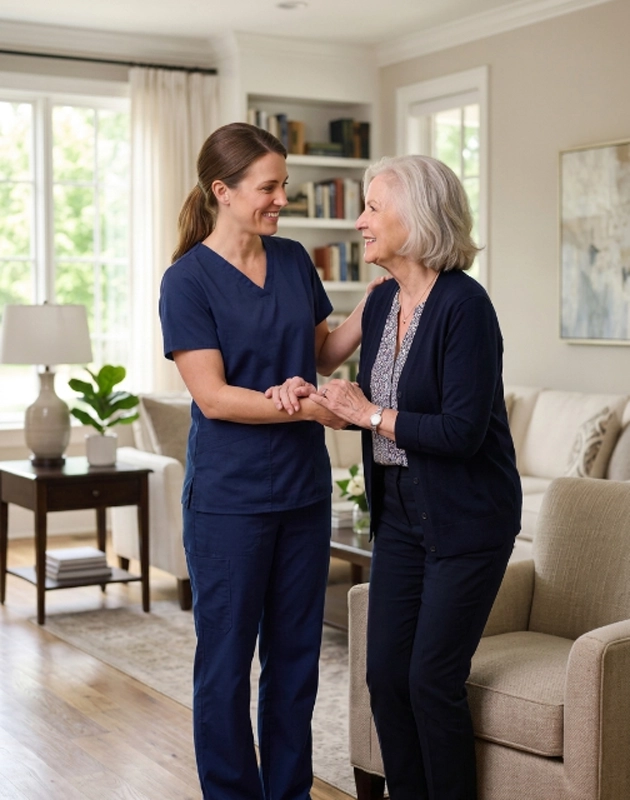
Many falls happen during specific, predictable moments, getting out of bed, rising from a chair, walking to the bathroom, stepping into or out of the shower, and moving around at night. A caregiver is present for exactly these moments, offering a steady arm, a guiding hand, and physical support during the transfers and movements that most often lead to a fall. Rather than a loved one attempting a risky move alone and hoping for the best, they have someone beside them who is trained to assist safely, to position themselves correctly, and to prevent a stumble from becoming a fall. For an older adult who is unsteady, simply having a capable person nearby transforms the most dangerous parts of the day into safe ones.
Eyes that notice hazards and changes early
A skilled caregiver is also a constant set of attentive eyes in the home. They notice the rug that has slipped out of place, the burned out bulb in the hallway, the puddle by the sink, and the clutter that has crept back into a walkway, and they address these hazards before they cause harm. Just as importantly, they notice changes in the person. Because a familiar caregiver sees your loved one day after day, they recognize when someone seems more unsteady than usual, more tired, more confused, or slower on their feet, any of which can signal a rising fall risk or an underlying problem such as dehydration, a medication effect, or an infection. Catching these early signs and reporting them to the family or the medical team means a problem can be addressed before it results in a fall. This watchful, knowing attention is something only a consistent human presence can provide
Keeping the body strong and steady
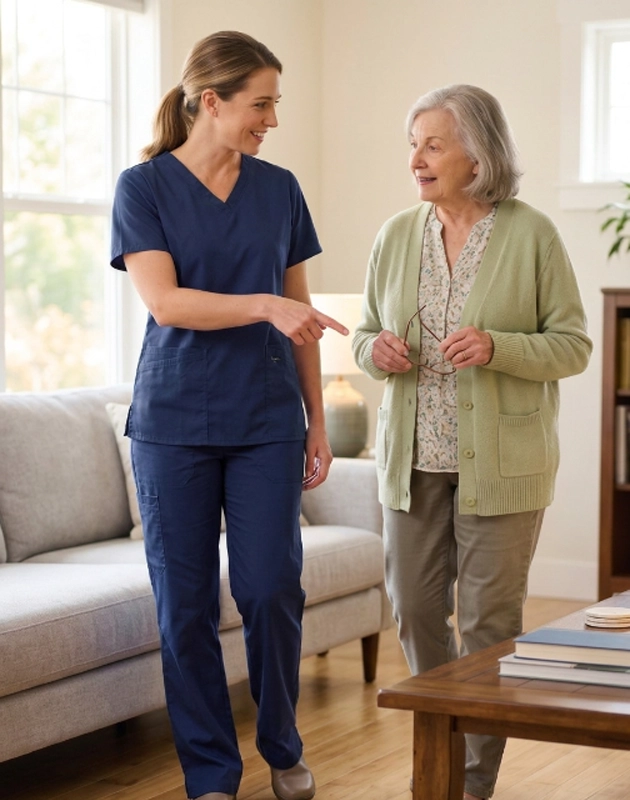
Caregivers help prevent falls over the longer term by supporting the very things that keep a body strong and balanced. They encourage and assist with the gentle activity and exercises that maintain leg strength, flexibility, and balance, always within the guidance a loved one’s doctor or physical therapist has set. They prepare nourishing meals and encourage the hydration that prevents the dizziness and weakness that lead to falls, which matters enormously in the Tucson heat. They provide reminders that keep medications on schedule, since both missed doses and the side effects of...
Caregivers help prevent falls over the longer term by supporting the very things that keep a body strong and balanced. They encourage and assist with the gentle activity and exercises that maintain leg strength, flexibility, and balance, always within the guidance a loved one’s doctor or physical therapist has set. They prepare nourishing meals and encourage the hydration that prevents the dizziness and weakness that lead to falls, which matters enormously in the Tucson heat. They provide reminders that keep medications on schedule, since both missed doses and the side effects of certain medications can contribute to falls. And they support good footwear and appropriate use of canes or walkers, making sure a loved one is actually using the mobility aids that keep them safe rather than leaving the walker in the corner.
Breaking the fearof falling cycle
Perhaps the most underappreciated way caregivers prevent falls is by helping a fearful loved one stay active and confident. As we saw earlier, the fear of falling can trap an older adult in a cycle of inactivity that steadily weakens them and makes falls more likely. A compassionate caregiver breaks that cycle by being a trusted companion who makes movement feel safe again. With a caregiver’s steady support, a loved one who had grown afraid to walk to the garden or move around the house can begin to do so again, rebuilding the strength and confidence that are themselves the best protection against falling. This blend of physical safety and gentle encouragement, given with patience and warmth, is exactly what compassionate home care provides.
Why does caregiver consistency matter so much for fall prevention?
Caregiver consistency matters for fall prevention because knowing an individual’s specific patterns, abilities, and warning signs is what allows a caregiver to anticipate and prevent falls rather than simply react to them. Fall risk is deeply personal. It depends on how a particular person moves, which times of day they are weakest, which medications affect them, and what their normal looks like, and all of that knowledge is built through familiarity over time.
When the same small team of caregivers cares for your loved one day after day, they come to know precisely how your loved one walks, which transfers they find hardest, the hour in the late afternoon when fatigue sets in, and the subtle signs that today is an unsteady day. They learn that your father tends to rush when the phone rings, or that your mother gets lightheaded if she has not had enough to drink, and they build their care around those specifics. A rotating cast of unfamiliar caregivers, by contrast, starts from scratch each time and cannot possibly know these things, which leaves dangerous gaps exactly where a person is most vulnerable.
This is why Premier In-home Care builds a small, dedicated team around each client and keeps them consistent, working from one detailed care plan that captures every fall risk and every safety need. When a regular caregiver is out, we cover from within that same familiar team and brief any new caregiver fully on your loved one’s needs before they arrive, so the knowledge that keeps your loved one safe is never lost. For fall prevention, this consistency is not a nicety. It is a genuine safeguard, because the caregiver who knows your loved one is the one most able to keep them on their feet.

What role does exercise and strength play in preventing falls?
Exercise and strength play a central role in preventing falls, because strong legs, a stable core, and good balance are what allow a person to move safely and to catch themselves when they stumble. Of all the things that can be done to prevent falls, maintaining physical strength and balance is among the most powerful, and it is one area where the fear of falling can lead families in exactly the wrong direction. It is tempting to think that an unsteady loved one should move less to stay safe, but the opposite is usually true. Less movement leads to weaker muscles and worse balance, which...
Exercise and strength play a central role in preventing falls, because strong legs, a stable core, and good balance are what allow a person to move safely and to catch themselves when they stumble. Of all the things that can be done to prevent falls, maintaining physical strength and balance is among the most powerful, and it is one area where the fear of falling can lead families in exactly the wrong direction. It is tempting to think that an unsteady loved one should move less to stay safe, but the opposite is usually true. Less movement leads to weaker muscles and worse balance, which raises the fall risk, while safe, appropriate activity builds the strength that protects against falls.
The kinds of activity that help are gentle and achievable. Exercises that build leg and core strength, movements that improve balance, and activities that maintain flexibility all contribute, and programs designed specifically for older adults, such as gentle strength routines and balance practices, have been shown to meaningfully reduce falls. The key is that the activity be appropriate to the individual and, where there are health concerns, guided by a doctor or physical therapist. This is another place where a caregiver’s support proves invaluable. A caregiver can encourage a loved one to do their prescribed exercises consistently, provide the standby support that makes practicing balance safe, and turn movement into a regular, companionable part of the day rather than a chore done alone and abandoned.
This is also where consistent daily care makes a real difference. Because the same familiar caregivers support your loved one every day, they naturally build good nutrition, gentle activity, and social connection into daily life — not as a program, but as a habit. That steady rhythm of movement and nourishment is one of the surest ways to keep a loved one strong enough to avoid a fall
Can nutrition and hydration reduce the risk of falling?
Yes, good nutrition and proper hydration meaningfully reduce the risk of falling, because they support the strength, steadiness, and alertness that keep a person safe on their feet. It is easy to overlook the connection between what a loved one eats and drinks and whether they fall, but the link is real and important, and it is one that daily caregiving is especially well suited to address.
Dehydration is a direct and common cause of falls in older adults. As people age, their sense of thirst diminishes, so they may not feel the need to drink even as their body becomes dehydrated, and dehydration causes dizziness, weakness, confusion, and drops in blood pressure that can lead directly to a fall. In the Tucson climate, where the heat is intense and the air is dry, this risk is heightened, and it deserves real attention through the long warm months. A caregiver who gently and consistently encourages a loved one to drink water through the day, and who prepares hydrating foods, provides steady protection against this often invisible danger.
Nutrition matters just as much over time. A body that is undernourished loses muscle, and weak muscles are a leading cause of falls, while poor nutrition also contributes to the fatigue and lightheadedness that make a stumble more likely. Many older adults eat poorly when they live alone, whether because cooking has become difficult, because appetite has faded, or because eating alone holds little pleasure. A caregiver changes this entirely by preparing nourishing, appealing meals, encouraging regular eating, and making mealtimes companionable again. Proper nutrition also supports bone strength, which does not prevent a fall but does reduce the chance that a fall results in a fracture. In all of these ways, the simple daily acts of preparing good food and encouraging enough fluids, done faithfully by a caring presence, quietly lower the odds of a fall.
How does supporting the mind help prevent falls?
Supporting the mind helps prevent falls because attention, awareness, and clear thinking are part of moving safely, and cognitive changes can raise fall risk in ways families do not always connect to the mind. Walking safely is not purely physical. It requires paying attention to one’s surroundings, judging distances, remembering to use a cane, and thinking clearly enough to avoid rushing or making an unsafe move. When memory and attention decline, whether through normal aging, dementia, or the temporary confusion that illness can bring, the risk of falling rises.
This is one reason mental engagement is part of comprehensive fall prevention. Our caregivers keep your loved one’s mind active through daily conversation, familiar activities, and gentle engagement tailored to their abilities. Delivered consistently by a familiar caregiver, this steady mental engagement supports the awareness and clear thinking that safe movement depends on. It is not a fall prevention program by itself, but as part of whole-person, consistent care, keeping the mind engaged complements the physical safeguards and contributes to a loved one’s overall steadiness and safety.
A caregiver’s attention to the mind also matters in a more immediate way. Because a familiar caregiver notices sudden changes in alertness or confusion, they can catch the kind of abrupt mental change that often precedes a fall and that frequently signals an underlying problem, such as an infection or a medication effect, that needs prompt attention. Caring for the mind and caring for physical safety are, in the end, part of the same whole, and a caregiver trained to attend to both provides more complete protection than either alone.

What should you do if an elderly loved one falls?
If an elderly loved one falls, the first steps are to stay calm, check for injuries before moving them, and get appropriate help, and afterward it is essential to understand why the fall happened so it can be prevented from recurring. Knowing how to respond to a fall is part of fall safety, because a calm, correct response can prevent a bad situation from becoming worse.
In the moment, it is important not to rush to lift the person up, since moving someone who has a serious injury can cause further harm. The safer approach is to stay calm, reassure them, and check whether they are...
If an elderly loved one falls, the first steps are to stay calm, check for injuries before moving them, and get appropriate help, and afterward it is essential to understand why the fall happened so it can be prevented from recurring. Knowing how to respond to a fall is part of fall safety, because a calm, correct response can prevent a bad situation from becoming worse.
In the moment, it is important not to rush to lift the person up, since moving someone who has a serious injury can cause further harm. The safer approach is to stay calm, reassure them, and check whether they are hurt before helping them move. If there is any sign of a serious injury, such as severe pain, a possible broken bone, a head injury, or if the person cannot get up or seems confused or unwell, it is best to call for emergency help and keep them comfortable and still while waiting. If they are not seriously hurt and are able, helping them rise slowly and in stages, resting along the way, is far safer than a quick pull upward. Even after a fall that seems minor, it is wise to watch closely for signs of injury that appear later, particularly after any bump to the head, and to let a doctor know a fall has occurred.
Just as important as the immediate response is what comes afterward. Every fall is a message about a risk that needs attention, and the crucial follow up is to ask why it happened. Was it a hazard in the home, a moment of dizziness, a new medication, a stretch of weakness, an unsteady rise in the night. Understanding the cause is what turns a fall into a prevented future fall. This is another area where having a professional caregiver involved makes a real difference. A caregiver present at the time can respond calmly and correctly, and can describe exactly what happened, which helps the family and the medical team understand the cause. And because a caregiver is there through the days that follow, they can watch for delayed signs of injury and help put in place the changes that prevent the next fall. For families who cannot be present at all hours, knowing that a capable, compassionate person is there to respond correctly brings genuine peace of mind.
When should a family consider home care for fall prevention?
A family should consider home care for fall prevention when a loved one has already fallen, seems increasingly unsteady, is growing fearful of moving, or when the family can no longer be present enough to keep them safe. Fall risk tends to build gradually, and there is rarely a single obvious moment that announces the need for help, so it is worth knowing the signs that suggest it is time.
A fall that has already happened is the clearest signal, since a first fall so sharply raises the risk of another, and bringing in support after a first fall is one of the best ways to prevent a second. Growing unsteadiness is another sign, whether it shows up as reaching for furniture while walking, difficulty rising from a chair, a shuffling or uncertain gait, or new hesitation on stairs. A loved one who has become fearful of falling, and who has started to limit their activity as a result, benefits enormously from the steadying support that lets them stay active safely. Families should also consider help when their own presence is not enough, when work, distance, or exhaustion mean that a loved one is spending long stretches alone during exactly the hours falls are most likely to happen.
Home care for fall prevention does not have to mean full time care or a loss of independence. It can begin with support during the highest risk parts of the day, a caregiver present in the morning and evening around the risky transfers and the trips to the bathroom, and it can grow if needs increase. For loved ones whose fall risk is high around the clock, or who are unsafe at night, more extensive support is available, including live in care with one familiar caregiver in the home and 24 hour care with awake caregivers in shifts so someone is always alert. The right level depends on the individual, and it can be matched precisely to a loved one’s risk. What matters is recognizing that the goal is not to take over a loved one’s life but to protect it, so they can go on living safely in the home they love.
How does Premier In-home Care approach fall prevention?
Premier In-home Care approaches fall prevention as a central, everyday part of care, combining a small consistent team, a detailed understanding of each client, home safety awareness, and consistent, attentive caregiving to keep loved ones safe on their feet. Rather than treating fall prevention as a single task, we build it into the fabric of the care we provide, because protecting a loved one’s safety and independence is one of the most important things a family entrusts to us.
It begins with getting to know your loved one thoroughly, their strengths, their limitations, their specific fall risks, and the details of their home and routine, and turning that understanding into a care plan every caregiver follows. From there, a small, dedicated team provides consistent daily support, offering steady physical help during the riskiest moments, watching for hazards and for changes in your loved one’s condition, encouraging the activity and nutrition that build strength, and providing the medication reminders and hydration support that guard against dizziness and weakness. Consistent daily care keeps your loved one nourished, active, and mentally engaged, our caregivers watch closely for changes, and our care managers stay involved to adjust the plan as needs change. Above all, we provide the compassionate, familiar presence that lets a fearful or unsteady loved one move through their day with confidence and safety.
Our caregivers live in this community and understand what keeps an older adult safe here, including the real demands of the desert heat and the importance of hydration through the long Tucson summers. We provide fall prevention focused care throughout Tucson, Oro Valley, Marana, Catalina, Catalina Foothills, Casas Adobes, Tanque Verde, Vail, Rita Ranch, Sahuarita, and the SaddleBrooke and Green Valley 55+ communities. For families worried about a loved one’s safety, we offer not just help, but genuine peace of mind, the knowledge that a caring, capable person is there to keep watch.
Questions families often ask about fall prevention
Helping your loved one stay safe, steady, and at home
Falls are one of the most common and serious risks our elderly loved ones face, but they are not inevitable, and no family should feel they must simply hope for the best. With understanding, sensible changes at home, attention to strength, nutrition, medications, and the mind, and the steady presence of a compassionate caregiver, the odds of a fall can be reduced dramatically, and a loved one can go on living safely in the home they cherish. If you are worried about a loved one’s safety, we would be glad to help you understand their risks and build a plan of care around keeping them safe on their feet. Reach out to talk with our team and set up a free in home consultation. We would be honored to help.
Call (520) 276-6555 Premier In-home Care 3275 W Ina Road; Suite 117 Tucson, AZ 85741